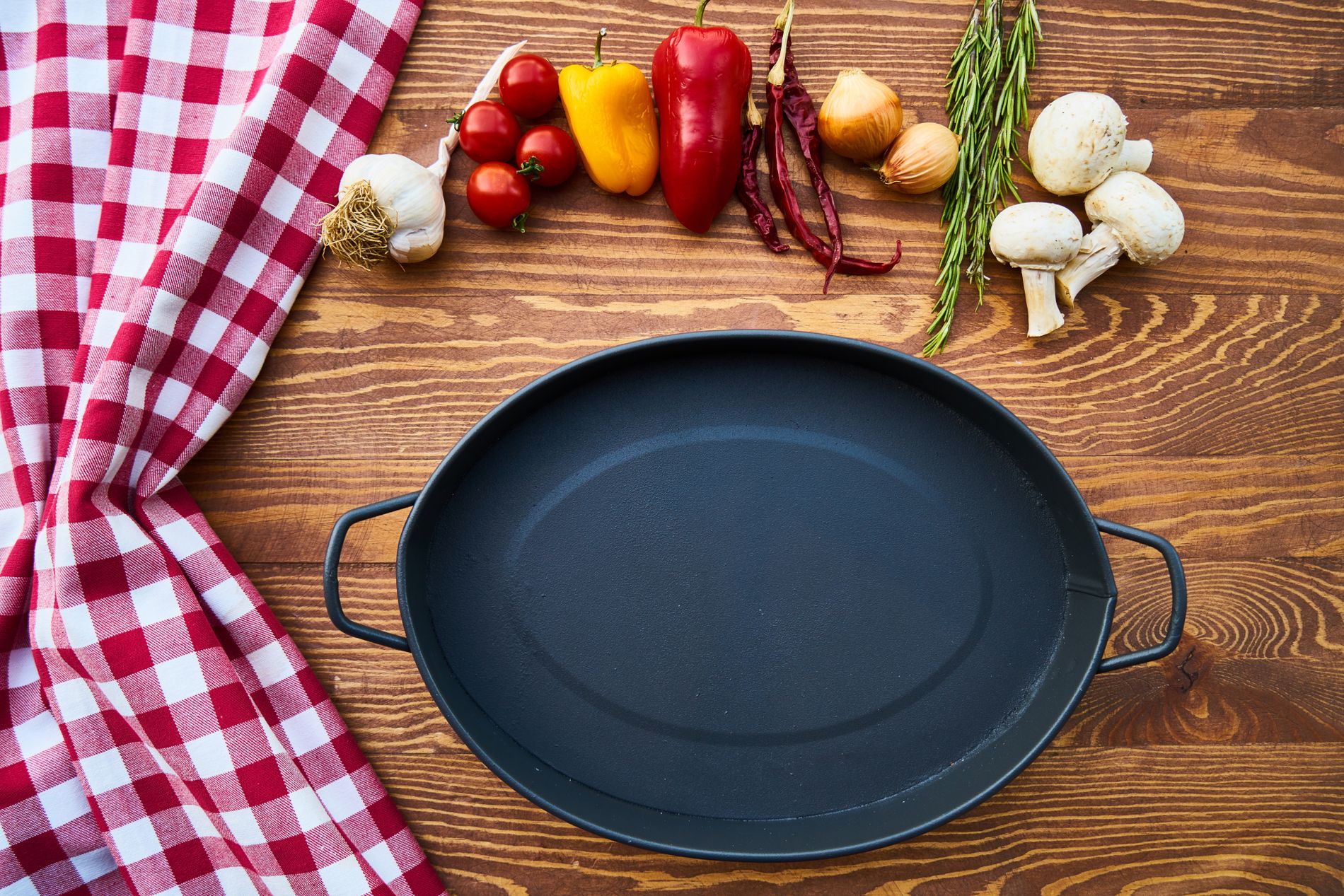
Cast iron should come with a pan, not a priesthood.
Somewhere in the history of cooking, a heavy black frying pan became an object of almost religious anxiety. People are told never to wash it, never to cook tomatoes in it, never to touch it without a wooden spoon, and to feed it an increasingly elaborate selection of oils as though it were an elderly racehorse.
It is a lump of iron. A remarkably useful lump of iron, admittedly, but one that can stand beside a bed of charcoal and take a serious amount of heat. If the pan survived a nineteenth-century kitchen, it'll probably survive a teaspoon of washing-up liquid.
Seasoning is worth understanding because it works. It protects bare iron from rust and makes the cooking surface easier to use. But it isn't magic, and it certainly doesn't require you to surrender an entire weekend to the oven.
What seasoning actually is.
Cast iron is porous in the everyday sense of having microscopic surface texture, but it's not a sponge that drinks litres of oil. When a very thin layer of cooking oil is heated sufficiently, components of that fat oxidise and polymerise, forming a hard, dark coating bonded to the metal. Repeated cooking and occasional deliberate seasoning develop that layer further.
This isn't the same as burning a puddle of oil into a black crust. Good seasoning is thin, dry-feeling and adherent. Thick oil tends to turn gummy, tacky and uneven. That's why the most useful instruction in this entire piece is also the least glamorous: wipe nearly all the oil off.
The dark colour itself doesn't tell the whole story. A brand-new pre-seasoned pan may be grey-black and fairly rough. A well-used old skillet can be smooth and almost satin-like. Both can cook a good steak. The finish improves through reasonable use, not through polishing it for display.
Before you season anything, check what you own.
Bare cast iron, including most black factory-seasoned skillets and many Dutch ovens, is what we're discussing. Enamelled cast iron — the colourful casseroles with a glass-like enamel coating — does not need oil seasoning. Baking a polymerised coating onto its enamel is solving a problem it doesn't have. Follow the maker's instructions instead.
Most modern bare cast-iron skillets arrive pre-seasoned and ready to use. That means you can wash them, dry them, put a little fat in the pan and start cooking. You do not need to strip off good factory seasoning and spend six hours recreating it because someone on the internet prefers the romance of doing everything from scratch.
The complete oven-seasoning method.
Use this when you've restored a rusty pan, exposed a substantial area of bare iron, or have a skillet whose seasoning really has broken down. You'll need the pan, mild soap, a brush or scrubber, a cloth or paper towel, a neutral cooking oil and an oven large enough to hold the pan with plenty of clearance.
- Start clean. Wash the bare-iron pan with warm water and a little washing-up liquid. Remove old food, sticky residue and any loose rust. Dry it thoroughly, including the handle and underside. A few minutes over a low flame can drive off the last moisture, provided you don't leave an empty pan heating unattended.
- Choose a straightforward oil. Ordinary rapeseed/canola or another neutral vegetable oil works. Lodge seasons its pans with soy-based vegetable oil. You don't need a boutique bottle with an impressive smoke-point graph. The aim is a thin, even film capable of polymerising.
- Rub a few drops everywhere. Coat the interior, outside, handle and base lightly. Then take a clean cloth and rub it down as though you've changed your mind about oiling it. The surface should look barely glossy, certainly not wet. Any visible puddle is already too much.
- Heat the oven. Lodge recommends about 230–260°C / 450–500°F and baking for an hour. Use the temperature permitted by your cookware manufacturer, ensure the oven is well ventilated and be aware that seasoning can produce smoke. If your pan has a wooden, plastic or otherwise non-oven-safe component, it doesn't belong in this process.
- Place the pan upside down. Put it on an oven rack with a separate lower tray or foil below to catch any drips. Never place a loose sheet where it can contact a heating element or block an oven vent. Bake for approximately one hour.
- Let it cool in the oven. Turn off the heat and allow the metal to cool gradually. Once comfortable to handle, examine the finish. It should be dry to the touch, not sticky. Repeat one or two very thin coats if the pan was stripped back to bare metal; otherwise, put it to work.
That is seasoning. Not a sacrament. Not a six-part subscription course. Twenty minutes of actual work with the oven doing the rest.
Why it's sticky, blotchy or flaky.
Sticky: almost always too much oil, insufficient heat or insufficient time. The cure is usually to wash off excess residue and bake the pan again with a very thin coat. Don't paint another heavy layer over the top and hope the problem will surrender.
Blotchy: normal to a point, especially early on. The surface doesn't need to be a perfectly uniform lacquered black. Use the pan.
Flaking: thick, poorly bonded deposits can lift. Remove loose material, clean the affected area, dry and rebuild with thin seasoning layers. A rough, patchy old skillet need not be thrown away because the finish looks less photogenic than a brand-new one.
Orange rust: exposed iron met water and oxygen. Light rust can often be scrubbed away, cleaned, dried and reseasoned. Deep structural corrosion, cracking or a warped pan requires a more careful assessment — none of these is improved by adding another spoon of oil.
How to clean it after dinner.
Here is a routine worth remembering precisely because it is so boring.
- Allow the pan to cool enough to handle safely; don't shock a very hot pan with cold water.
- Wash out food with warm water, a brush or non-damaging scraper. A small amount of ordinary dish soap is fine. Modern detergents are not the harsh old lye soaps of folklore.
- Rinse, wipe, and dry completely. Set it briefly over low heat if necessary to drive moisture from the surface.
- When the pan is dry, you can rub in the smallest film of oil before storing. Wipe away any surplus. If the seasoning is healthy and storage is dry, heavy oiling every single time is unnecessary.
Don't leave it soaking in the sink overnight, and don't put ordinary bare cast iron through the dishwasher. Those are efficient ways to discover what rust looks like. Also, avoid storing it with the lid sealed tightly onto a damp surface; trapped moisture is not your friend.
Can you cook tomatoes in cast iron?
Yes. The word 'acid' does not cause an established pan to disintegrate on contact. Quick tomato sauces, a squeeze of lemon or a splash of wine are ordinary parts of cooking. A long, acidic simmer in a poorly seasoned bare pan can damage the coating or pick up metallic flavours, so use enamelled cast iron or stainless steel for an all-afternoon tomato reduction. This is judgement, not a prohibition.
Likewise, cooking a few rashers of bacon or a panful of onions doesn't magically season every neglected patch. The fat and heat of regular cooking help, but sugary sauces can still leave sticky deposits and harsh scrubbing can remove weak coatings. Maintain the pan reasonably and the finish generally looks after itself.
What cast iron does brilliantly.
Cast iron stores plenty of heat once properly preheated. That's useful for browning meat, crisping potatoes, roasting vegetables and moving a whole pan from hob to oven or from an indirect barbecue zone to the table. It is not a magical perfect conductor. In fact, heat moves through cast iron relatively slowly, which is why a pan over a tiny burner can develop a very hot centre and cool edges.
Preheat gradually and give the pan time to even out. For steak, let the surface get properly hot, add suitable fat and avoid overcrowding. For cornbread or skillet bread, the warm metal can deliver a magnificent crust. For smoked mac and cheese, a heavy cast-iron vessel keeps the contents bubbling through a long, gentle finish.
It also earns its keep with our pulled-pork method. Smoke the shoulder first, then finish it in a lidded Dutch oven where the rendered juices and steady heat do the work. That's the kind of useful versatility worth buying equipment for.
What it doesn't do.
Cast iron is heavy. The handle gets hot. It's slow to change temperature once you overheat it. Bare iron dislikes prolonged damp storage. It isn't the most convenient pan for throwing together a quick, highly acidic sauce, and your pan's seasoning won't behave identically to a factory non-stick coating when you try to fry a cold egg with no oil.
None of these limitations is remotely serious enough to justify the fuss surrounding it. They just tell you when another pan is a better tool.
Open fire, charcoal and the old black pot.
There's an obvious reason cast iron fits Charred Kettle. You can cook with it on the stove, in the oven and over appropriate outdoor heat. No screen, app or replacement cartridge required. A solid pan, looked after, will still be useful long after the glossy countertop gadgets have gone to recycling.
When cooking outdoors, use a stable support that can carry the weight and follow the cookware manufacturer's heat restrictions. Very high direct flame can burn away seasoning, especially on exposed areas. Use the lid for slower, moist cooking and take it off when you need a crust. That's technique, not a flaw in the material.
The only ritual worth keeping.
Cook in it. Clean it. Dry it. Occasionally season it if it needs help. That's the whole story.
The reward isn't some mythical heirloom glow. It's putting a hot, well-maintained pan onto the fire, hearing onions start to hiss and knowing exactly what this straightforward old piece of equipment will do. There are more fashionable ways to spend money, but not many better ways to make dinner.