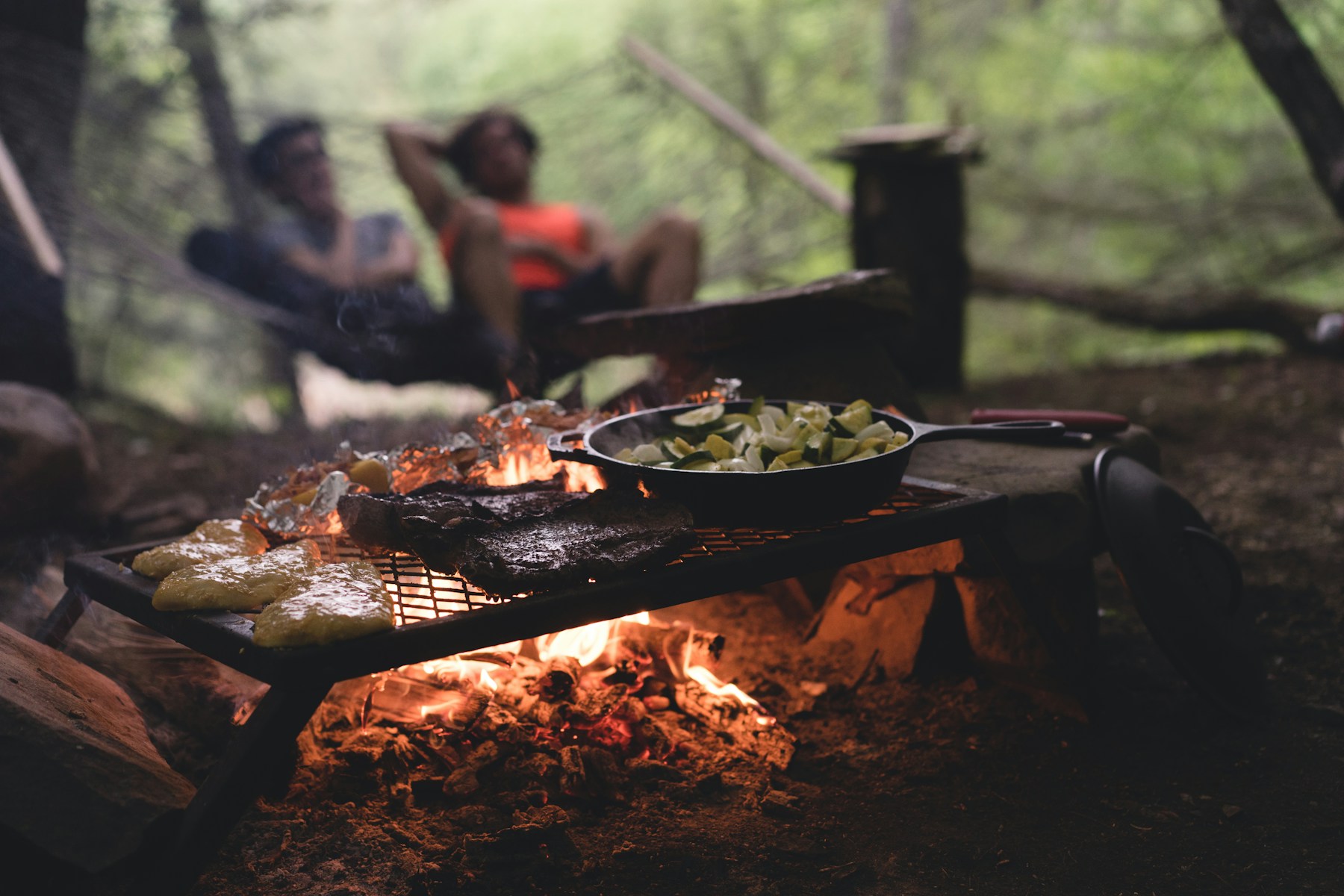
Give yourself somewhere to go.
An evenly covered bed of charcoal puts the same direct heat under everything. Banking the lit coals to one side creates a second space, away from the fiercest heat.
The hot zone is for browning. The cooler zone is for finishing thicker food more gently, or moving it out of the way when dripping fat causes a flare-up. With the lid closed, the indirect side can behave more like an oven.
Set it up deliberately.
- Place the barbecue on stable ground outdoors, clear of buildings, dry vegetation and overhead cover. Follow the manufacturer’s instructions.
- Light the fuel using an appropriate starter. Never use petrol or other improvised accelerants.
- Once the charcoal is ready, arrange it on one side of the charcoal grate using suitable tools and heat protection.
- Fit the cooking grate, let it heat and check how the grill responds before adding the food.
Use the space.
Start with the method your recipe calls for. You might sear over direct heat and move across to finish, or cook gently first and finish over the coals. Either way, move the food deliberately instead of trying to tame every flare-up where it stands.
For a gas barbecue, a similar arrangement uses one burner on and an adjacent zone off, where the grill’s instructions permit it. Never assume every barbecue works in exactly the same way.
Measure the part that matters.
A lid thermometer measures the air near the lid. A food probe tells you about the centre of the food. Those are different jobs. Use a clean food thermometer and the appropriate safe internal temperature for what you are cooking.