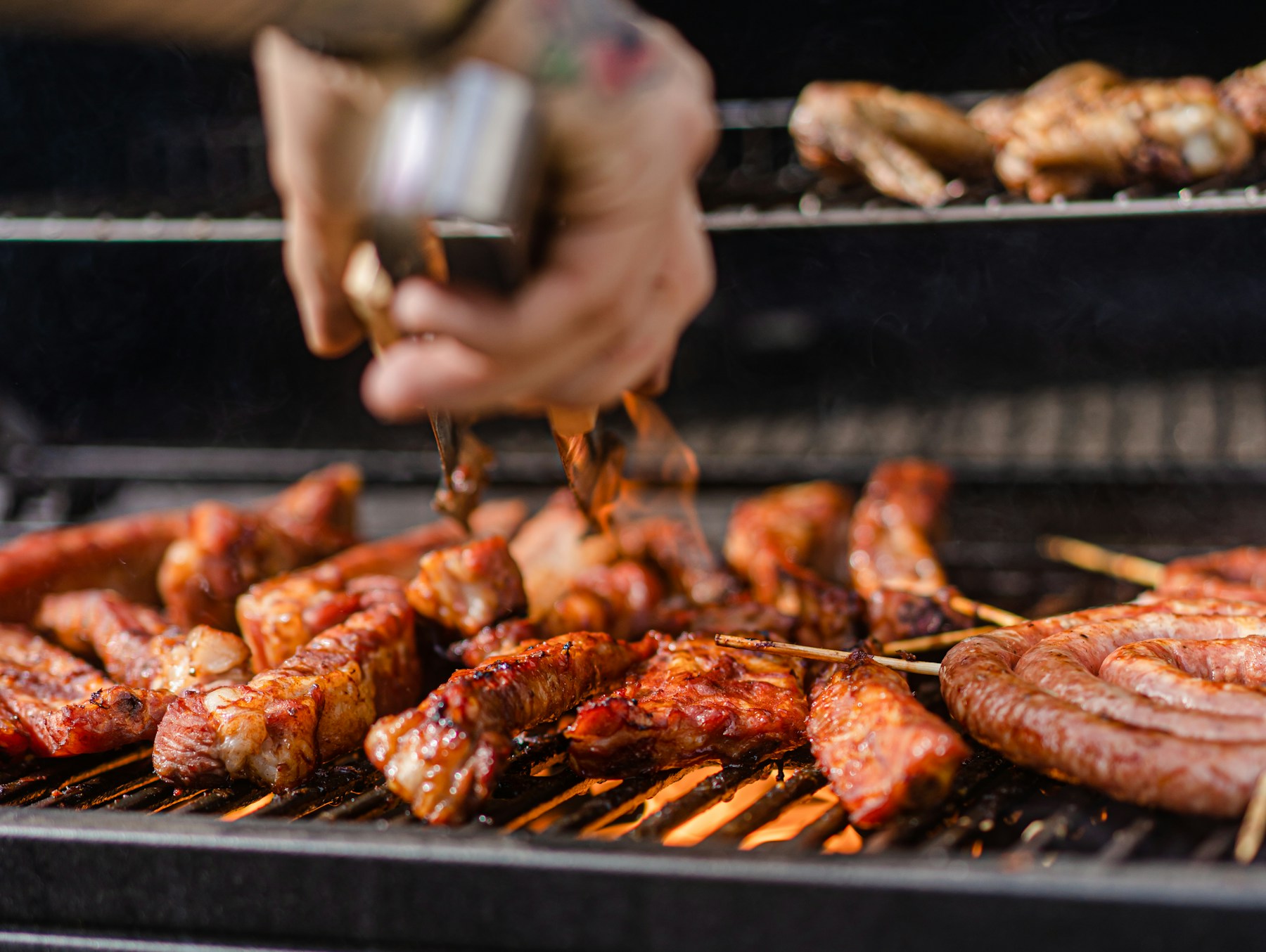
01 / Know your temperature.
A food thermometer answers a question that colour alone cannot: what is happening in the centre? Look for a clear display, a probe suited to the food you cook and straightforward cleaning instructions.
An instant-read thermometer is useful for checking several pieces of food. A leave-in probe can help monitor a longer cook, provided it is rated for that use. Neither makes the other redundant, and neither replaces safe handling.
02 / A better daily grind.
Choose the brewing method you enjoy before buying the equipment. For a manual filter setup, start with a suitable brewer, the right filters, a kettle and a small scale. A controllable pour is useful; a collection of specialist gadgets is optional.
If you buy a grinder, check that its adjustment range suits your method, that it is practical to clean and that replacement parts are available. A filter-coffee setup and an espresso setup can ask very different things of a grinder.
03 / Buy well. Look after it.
Long tongs, a stable chopping board and a knife you can keep sharp are useful more often than novelty tools. Look for comfortable handles, cleanable joins and straightforward construction.
Dry equipment before storing it. Follow the maker’s care instructions for blades, cast iron and wooden boards. Keep a note of model numbers and replacement parts. Maintenance is part of owning something well.
How our recommendations will work.
This is a guide to what to look for, not a hands-on product test. As our equipment coverage develops, we will distinguish direct experience from research and explain the basis for each recommendation.
Any future affiliate links will be identified. There are no affiliate purchase links in this opening guide.