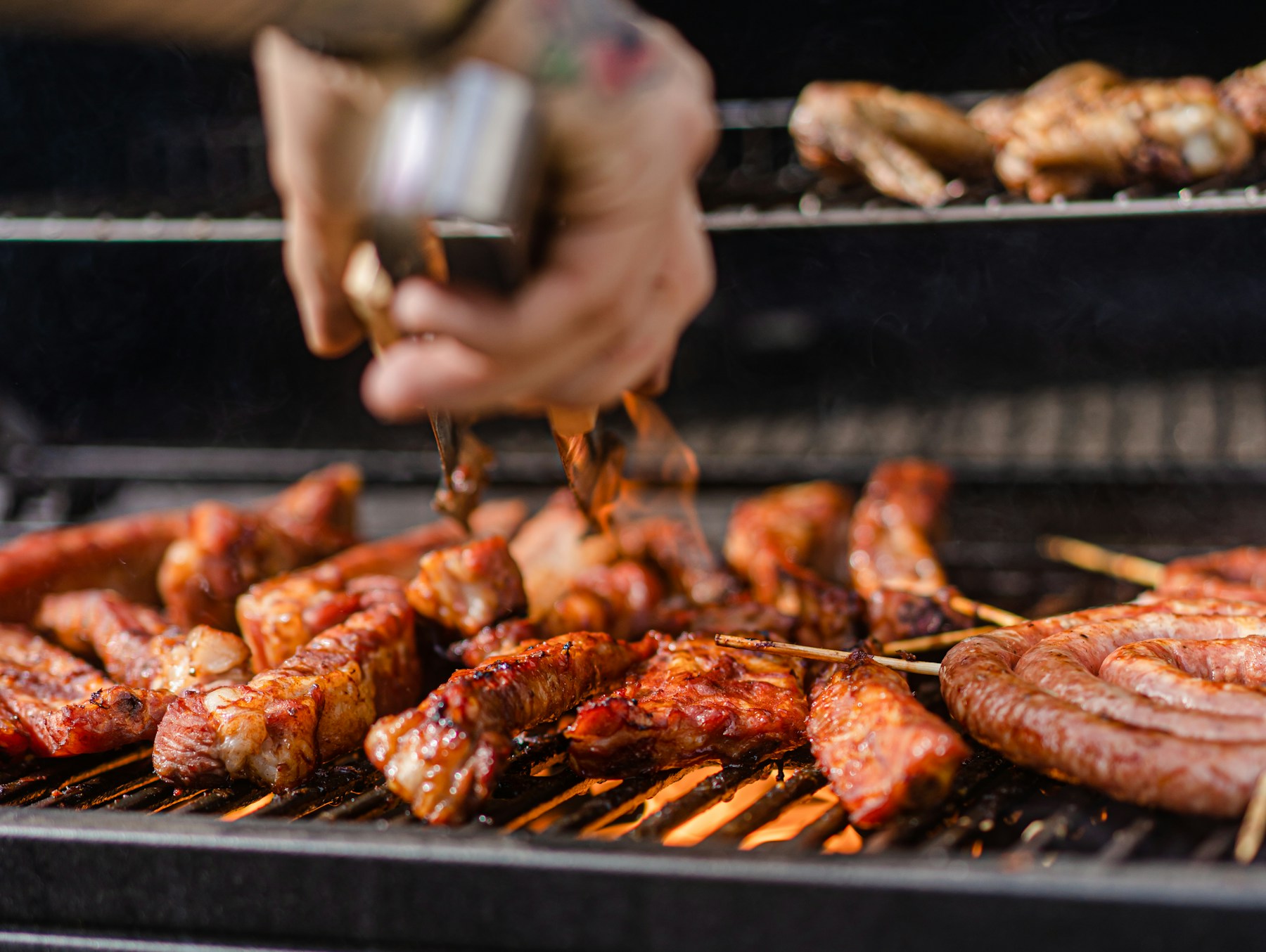
Yes, it's electric. Get over it.
There is a breed of barbecue enthusiast who believes dinner only counts if you've spent forty-five minutes coaxing a fire into life and another two hours explaining the importance of fire management to people who were perfectly happy just to eat a burger. I like charcoal. I love a proper live fire. But I'm not going to pretend every Tuesday night requires a ceremonial lighting of the coals.
We own a Ninja Woodfire. We love it. That's why it's getting a proper place in Charred Kettle, alongside the cast iron and charcoal. Not as a reluctant compromise. As a genuinely useful way to cook outside.
There's something wonderfully sensible about giving the cook consistent electric heat and letting a small quantity of real hardwood pellets supply the smoke. It cuts out most of the preparation that can make lighting a charcoal barbecue feel like more work than the dinner deserves. The food still has to be good, of course. A plug socket doesn't season the chicken for you.
What you're actually buying.
The Ninja Woodfire family includes several models, so check the badge before comparing features. For the technical detail here, we're using the UK OG701UK as the reference model. Ninja lists seven functions: Grill, Smoker, Air Fry, Roast, Bake, Reheat and Dehydrate. Its heater is rated at 2,400 watts, and Grill can reach 260°C / 500°F. A removable smoke box burns purpose-made hardwood pellets to add flavour. The electricity does the cooking; the pellets aren't there to fuel the whole machine.
That distinction matters. This is not a traditional offset smoker, a ceramic kamado or a disguised charcoal barbecue. It's a well-thought-out outdoor cooking appliance with some of the most useful parts of those experiences, minus the log splitting and endless vent adjustments.
Ninja lists an IPX4 splash-resistance rating for the OG701UK. That means it's designed for outdoor use in appropriate conditions, not that you should leave electrical connections sitting in the rain, bury the cable in a puddle or start cooking indoors. Follow the manual for your exact model.
Why it earns its space.
The best thing is the lack of fuss. Want dinner outdoors without building a fire first? Plug it in safely, choose a setting and get on with the cooking. That convenience isn't an embarrassing secret to confess in front of a charcoal purist. It's the reason a useful appliance gets used.
The smoke is real. Pellets smoulder in the smoke box and add wood-smoke aroma and flavour. It's not a bottled flavouring and it isn't an electronic trick. There's a difference between that controlled dose of smoke and hours spent tending a large offset smoker. Both have their place.
The range of cooking is the point. Wings that need a smoky start and a hotter, crisp finish. Pork that wants lower heat. Vegetables that appreciate a little colour. The option to roast or air fry outside when the kitchen is already full. A machine with several useful jobs is far easier to justify than a shiny gadget dedicated to exactly one.
And here's an uncomfortable truth: consistent heat makes it easier to learn. When you're trying to understand how long a piece of food needs, removing wildly fluctuating fire temperatures helps. Skill still matters. The machine simply leaves you more attention to spend on the food.
How to get a good first cook.
- Give it a proper place. Set the Woodfire on a stable surface outdoors, with the manufacturer's required clearances. Use a suitable, properly protected electrical supply. Check the cable arrangement before anyone trips over it with a plate of food.
- Choose the mode for the job. Grill is for a hotter surface cook. Smoker is for slower cooking with a smoky finish. Air Fry is useful when crispness matters. The right setting is the one that suits dinner, not the one that sounds most impressive.
- Use the pellets it was designed for. Ninja specifies compatible Woodfire pellets. The All-Purpose blend brings cherry, maple and oak; Robust adds hickory. One properly measured scoop goes a long way. More smoke isn't automatically better food.
- Follow the lighting sequence. Fit the smoke box and other cooking components exactly as the manual shows. The box uses a self-ignition system; don't improvise with charcoal, heating pellets or bits of timber from the shed.
- Cook to the right centre temperature. Poultry needs at least 74°C / 165°F; for pork, offal and other foods follow the appropriate safe guidance. A setting on the front of the machine tells you what you asked it to do, not what the middle of the meat has achieved.
- Finish deliberately. Smoke can build flavour, but it doesn't guarantee crispy chicken skin. Switch to an appropriate hotter finishing method when that's what the food needs, watching closely to avoid burning. Let the unit cool fully before cleaning according to its instructions.
The cooks I'd build around it.
Chicken wings are a natural fit: give them smoke, then a hotter finish until the skin crisps. Our wings guide explains that approach. Pork shoulder can take on smoke before the meat goes into a covered pot for the long tender finish. Sweetcorn and peppers make excellent quick cooks with a hint of wood flavour. A suitably sized chicken is another obvious candidate.
There is an important distinction between the Woodfire's cooking capacity and that of a large barrel or offset smoker. If you're feeding twenty people, a compact grill is going to ask you to cook in batches. That's a limitation, not a design scandal.
What it won't replace.
It doesn't give you the experience of building a charcoal fire, raking embers or sitting beside a smoker for a long afternoon. If that's what you enjoy — and I understand the appeal — a Woodfire isn't going to scratch precisely the same itch.
It also needs mains power, suitable outdoor electrical arrangements and regular cleaning. Its cooking area is modest. Pellets cost money and you need compatible supplies. None of that is a dealbreaker; it's the straightforward business of choosing equipment for the way you cook.
And an outdoor electric smoker still isn't an excuse to leave food unattended indefinitely or guess whether chicken is cooked. It takes much of the fire-management work away. It does not abolish food safety, and frankly that would be a terrible feature.
The verdict: buy for the cooking you'll actually do.
The Ninja Woodfire is excellent at making outdoor cooking easy enough to become ordinary. That's a much bigger achievement than it sounds. A barbecue you use three nights a week is more valuable than an expensive monument in the garden that only comes out for bank holidays.
We like charcoal. We like cast iron. We like a fire that demands a bit of attention. We also like equipment that removes unnecessary faff and produces good food. The Ninja earns its place in that company.
Our enthusiasm comes from owning and enjoying a Woodfire; the model-specific figures and operating instructions above are from Ninja's published OG701UK information, not a claim that we've run instrumented comparison tests on every model. That's all the qualification the review needs.