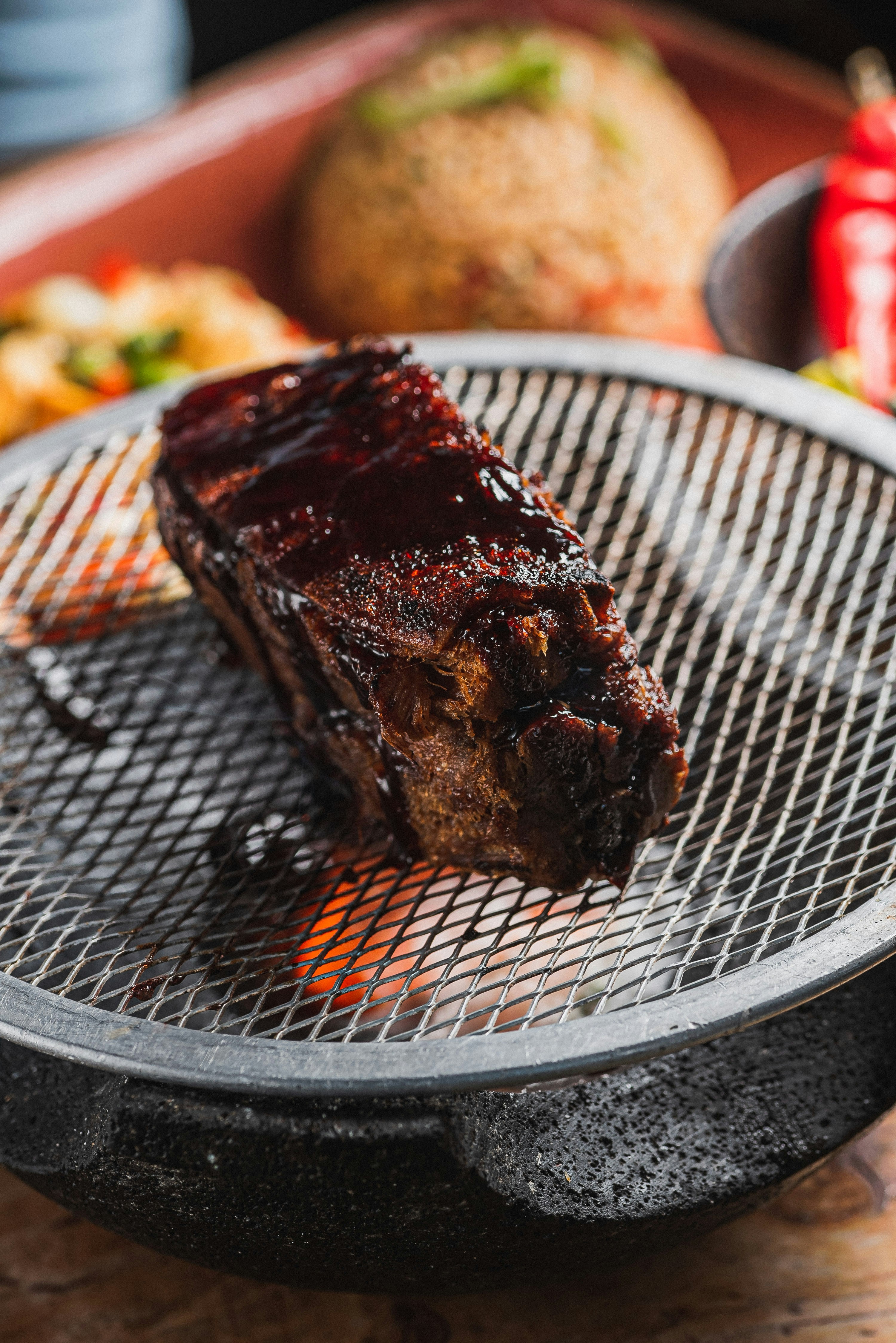
Good ribs should resist you a little.
There are people who judge ribs by whether the meat collapses into paste the moment a bone looks at it. Fair enough, if that's what they enjoy. But there's pleasure in ribs that keep their shape, have a proper bark and offer a clean bite. The meat should leave the bone without a wrestling match, not require a spoon.
We're cooking pork spare ribs or baby backs over indirect heat. The process is simple enough. It's the impatience that causes trouble.
For two racks.
- 2 racks pork ribs, around 2–2.5 kg / 4½–5½ lb total
- 20–25 g / about 3–4 tsp fine salt, adjusted for rack weight and any pre-seasoning
- 2 tbsp paprika; 1 tbsp black pepper; 2 tsp garlic powder
- 1 tsp mustard powder; 1 tsp chilli flakes, optional
- 3–4 tbsp barbecue sauce, optional for the final glaze
You'll need a smoker or covered barbecue with an indirect zone, a chamber thermometer, clean probe, tongs and a foil or butcher-paper wrap if you choose to use one.
Method.
- Trim. Remove loose flaps of meat and, if present and practical, the tough membrane from the bone side. Pat dry and season generously. Keep chilled until cooking.
- Set the fire. Maintain approximately 120–135°C / 250–275°F with indirect heat. Apple, cherry, oak or a little hickory all work. More smoke is not always better.
- Smoke unwrapped. Place the ribs away from direct flame. Start checking colour and moisture after roughly two hours; a total cook may be about 4–6 hours depending on cut, thickness and cooker. Those numbers are orientation, not a finish time.
- Choose whether to wrap. Foil with a small splash of liquid can help push through a slow finish but softens bark. Leave unwrapped if you prefer a firmer exterior. The popular 3-2-1 timetable can be a useful teaching device, not a law of physics.
- Test tenderness. Look for exposed bone ends, a slight surface crack when you lift a rack at the centre and a toothpick sliding between bones with little resistance. Check safe internal temperature with a food thermometer where possible; a rack typically needs considerably more cooking than the pork minimum of 63°C / 145°F plus rest before the connective tissue becomes pleasant.
- Glaze only at the end. Brush with sauce for the last 15–25 minutes if you want it. Set without burning. Rest briefly and cut between the bones.
The slow-cooker version.
If charcoal isn't happening, make a different but perfectly respectable rib dinner. Cut 1.5–2 kg / 3½–4½ lb of ribs into sections that fit your slow cooker. Season with the same dry rub, add 100–150 ml / ½–⅔ cup stock or apple juice, and cook fully thawed ribs with the lid on LOW for roughly 6–8 hours, following your cooker's size and meat guidance. Keep the lid closed; check the meat is thoroughly cooked and tender. Slow-cooker ribs are soft rather than bark-covered. To restore some browned edges, transfer carefully to a tray, brush lightly with sauce and finish for a few minutes under a hot grill/broiler, watching the sugar. No smoke claims, no apologies.
The bend test beats a timetable.
Lift one end of the rack with tongs and watch the surface. When the meat has softened properly, the rack bends and the bark begins to crack. That's more useful than insisting every rack must spend exactly three hours bare, two hours wrapped and one hour glazed. Thickness, fat and the animal itself haven't read your schedule.
There's a difference between tender and defeated. If the meat falls into separate strands before you've cut it, you've made perfectly edible pork — just a different result from a rack with a satisfying bite. Decide which you want and stop worshipping the timer.
About the sauce.
Try them without it first. Smoke, pork fat, pepper and salt can be quite a good combination on their own. If you want something sweeter, put it on late or on the table. A rack shouldn't taste as though it spent the afternoon being varnished.
Serve with slaw, pickles and something sour. Refrigerate leftovers within two hours. For a second cook, crisp the cut ribs with care rather than steaming them to sadness.