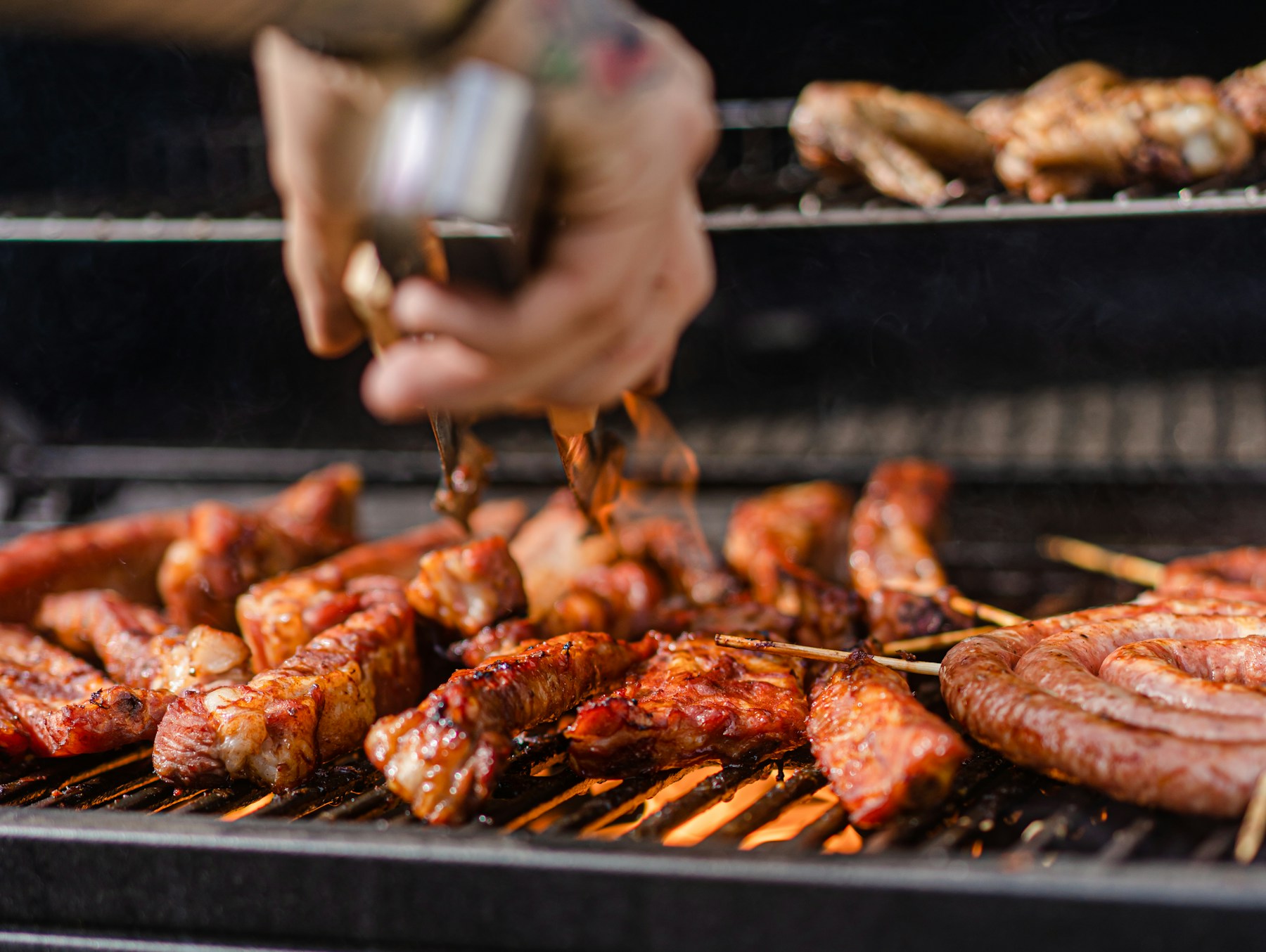
Start with the meal, not the stopwatch.
Choose something that suits the time you actually have. A long smoke is a pleasure when the afternoon is free. A shorter grill cook can be just as good when it isn’t.
Decide roughly when you would like to eat, then work backwards. Leave room for lighting the barbecue, preparing the sides and resting the meat. If you are trying a slow cook for the first time, give yourself more margin than you think you need.
Do the small jobs early.
Make the sauce. Wash the leaves. Put the plates somewhere sensible. Keep raw ingredients chilled until you need them. Those unremarkable little jobs are what let you enjoy the cook.
Check the fuel before inviting everyone round. Discovering an empty bag of charcoal is a fairly efficient way to change the menu.
Make something worth sharing.
Then make time to share it.
Let the afternoon happen.
A slow cook doesn’t need constant interference. Follow the method, watch the temperature and use the quieter moments well. Put the kettle on. Set the table. Talk to the people who came to see you.
Keep the barbecue attended and children clear of hot surfaces. Taking your time and paying attention belong together.
Leave tomorrow something good.
Plan for leftovers before serving, rather than leaving everything out all afternoon. Cool and refrigerate cooked food promptly, using smaller containers where useful. The Food Standards Agency recommends chilling leftovers within one to two hours and using refrigerated leftovers within 48 hours, or freezing them.
Tomorrow’s lunch can be the other good thing to come out of Sunday.